what happens after humanity wins?
what if all humans on earth never had to work again? everyone has their basic needs met. food, water, a cozy home, healthcare, safety, you name it. everyone is comfortable, healthy, and free. all the existential threats facing humanity are well taken care of. and no one needs to be saved. no one.
just pause for a moment.
imagine that you’re living in this realistic utopia, right now.
what would you be doing? how would you live your life?
and more importantly, what happens when humanity finally solves survival, only to discover that survival was never our only problem?
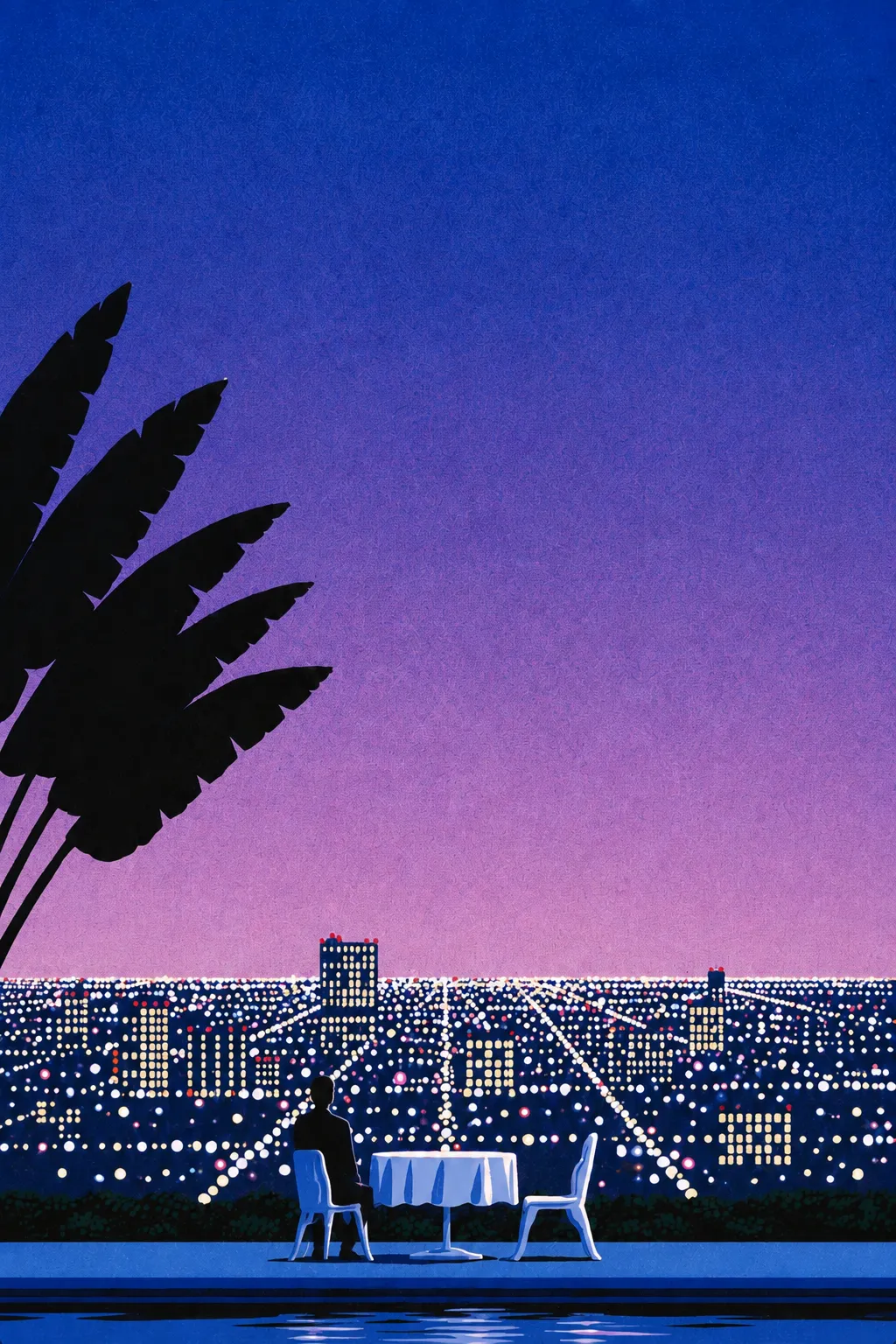
for most of human history, work was never really optional. hunter-gatherers hunted because hunger was waiting. farmers cultivated land because entire communities depended on the harvest. factory workers exchanged their time and bodies for money, which could then be exchanged for food, shelter, clothing, and almost everything else necessary for survival. the form of work changed, but the underlying bargain remained the same: contribute, or risk going without.
today, work has become far more complicated. there are jobs across technology, energy, healthcare, finance, education, entertainment, and almost everything in between. even self-employed paths like entrepreneurship offer alternative ways to survive, although often in exchange for greater risk and uncertainty. but as artificial intelligence becomes more powerful and capable, it may eventually reorganise civilisation so efficiently that human labour is no longer necessary for a stable and high-functioning society.
perhaps machines will produce our food, construct our homes, cure our diseases, maintain our infrastructure, manage our resources, and solve problems far beyond the limits of human intelligence. perhaps one day, the idea of spending most of your waking life earning the right to continue existing will feel as primitive as hunting with sharpened stones.
but work was never only about survival.
for many people, work became an identity. a surgeon may feel purposeful because they saved someone who would otherwise have died. a designer may take pride in turning an idea into something beautiful. a scientist may spend decades uncovering one tiny truth about the universe. a teacher may remember the exact moment a student finally understood something they once believed was impossible.
so when these jobs are eventually performed faster and more accurately by algorithms, the unintended consequence may not simply be unemployment.
it may be a crisis of meaning.
i started daydreaming about this future a few years ago, especially when i began thinking about the possibility of superintelligence becoming the cornerstone of societies like this. such a future is obviously not guaranteed. perhaps artificial intelligence never reaches that level. perhaps humanity destroys itself before it does. perhaps reality unfolds in a way none of us can predict.
but the possibility is there.
and i think that alone makes the question worth asking.
when “work for survival” disappears, perhaps some of you would spend your lives pursuing a craft and mastering it. perhaps you would travel across the world, explore distant planets, meet every kind of person, and collect experiences that no human alive today could even imagine. perhaps you would create art, study the universe, build strange things, or spend centuries learning simply because curiosity still pulls you forward.
but perhaps you would be the black sheep.
the one who has done it all, seen it all, tasted it all, read it all, and mastered everything that could be mastered. imagine waking up after centuries of existence and realising that nothing can surprise you anymore.
what then?
some say it is both a blessing and a curse to feel existential. it is a blessing because those who are constantly struggling for survival often do not have the time or energy to sit around wondering what existence means. they are thinking about how to pay next month’s rent, how to put food on the table, or how to keep the people they love alive.
but it is also a curse because once your immediate struggles disappear, you begin seeing life without its usual distractions. you see the world without rose-tinted lenses. and sometimes, that can make you feel painfully alone. everything can feel strangely heavy, even when nothing is technically wrong.
even in a utopian society where most suffering has disappeared, where humanity’s greatest problems have been solved and nobody has to work mindlessly anymore, existential despair may still remain.
but perhaps existential despair was never a problem that could be permanently solved.
perhaps it is simply a truth we must learn to live beside.
utopia may take away most of our pain, but it cannot tell us what our lives are supposed to mean. no machine, government, superintelligence, or perfect society can hand us a final answer and make it feel true.
that responsibility would still belong to us.
but how does someone create meaning in a society with almost no suffering or pain? what happens when you have absorbed nearly all available knowledge through your augmented brain, travelled across the earth and beyond it, and mastered almost every skill that could ever be learned?
what happens when there is no next achievement, no higher level, no greater mountain left to climb?
when i think deeply about this, i realise that we tend to associate meaning too heavily with growth. we believe life must constantly be moving somewhere. we must become wealthier, smarter, stronger, more successful, more knowledgeable, more experienced, more complete.
there must always be another goal.
another milestone.
another invisible stat to maximise.
maybe meaning does not come from pleasure, comfort, or even happiness. maybe it comes from the distance between what we are and what we could become. and if that distance ever disappears, perhaps meaning begins disappearing with it.
but perhaps that is only because we were taught to treat life like a game that must be completed.
maybe instead of desperately asking what is left, we should learn to sit back and relax.
sip your morning coffee. watch the sunset. play with your pets. listen to someone you love talk about their day. feel the air entering your lungs. notice the light entering the room. be fully present while doing something completely ordinary.
meaning does not always have to be discovered at the edge of the universe.
sometimes, it can be attributed to the simplest moments, simply by being aware enough to experience them.
you could become a decked-out half-human, half-robot hybrid who has mastered everything and absorbed the entirety of human knowledge, but you would still be conscious.
you would still experience.
you would still see, feel, wonder, remember, and care.
and no matter how advanced you become or how long you manage to live, your existence will still be temporary. the stars will eventually die. usable energy will disappear. the universe itself may one day fade into darkness.
so just be.
breathe. see. experience. reflect. live.
those things are free.
meaning was never necessarily about endless growth, the accumulation of wealth, or maxing out every invisible stat. perhaps meaning was simply about participating in one of the universe’s grandest mysteries: being conscious and alive.
you are a temporary arrangement of matter capable of looking at the universe and knowing that it exists.
for one brief moment, the universe is experiencing itself through you.
everything that has happened in your life somehow led you to reading this post today. you were probably curious. you probably questioned many things throughout your life. and at a few points in time, you may have felt lost and alone, wondering what the meaning of all of this was.
i have felt that too.
and maybe there is no grand answer waiting for us at the end of human progress.
maybe there is only this moment.
it’s 2:44am. somewhere outside my room, the world is still moving. tomorrow, i’ll wake up, drink something warm, speak to people i care about, and continue participating in this strange thing called existence.
maybe that is enough.
good night.
-ace